Showing posts with label Crew-1. Show all posts

Wednesday, January 19, 2022

NASA safety panel recommends agency review how it manages human spaceflight programs

NASA’s safety advisers are calling on the agency to reexamine how it manages human spaceflight programs to reflect the changing relationship with industry and to better run its core exploration effort. The central theme of the annual report of the Aerospace Safety Advisory Panel (ASAP), released Jan. 11, was a need to reexamine the roles and responsibilities of NASA as human spaceflight programs are increasingly managed by industry rather than NASA itself, as was the case for most of the agency’s history. “If these trends continue, which seems likely, the Panel believes it is crucial for NASA to strategically evaluate the path ahead and determine the future shape of the organization,” the report states. “Once the Agency has clarified a vision and strategy, it should then make the decisions, and take the necessary actions, to enable it to accomplish the required transformation.” The panel argued that this was time to address those issues as the agency was at an “inflection point” given both growing commercial capabilities and roles and the agency’s own long-term plans for human missions to the moon and Mars that need to fit within limited budgets. “Consequently, the Agency will need to operate differently—from strategic planning and how it approaches program management, to workforce development, facility maintenance, acquisition strategies, contract types, and partnerships,” it wrote. That transition is within the mandate of ASAP because of the implications such changes have on human spaceflight safety, the panel argued in the report. “The Panel believes that NASA’s vision for the future, and a clear definition of how it will evaluate and make decisions related to risk (in addition to how it will manage and execute programs), are extremely important factors in ensuring human space flight safety.”


The shift to commercial crew transportation has created some specific issues in the last year mentioned in the report. The panel cited a “concerning dissonance” between NASA and SpaceX during preparations for the Crew-1 landing last May. The two organizations “differed in their understanding of the level of risk to be incurred” regarding a nighttime landing of the Crew Dragon spacecraft, with NASA initially preferring a daytime landing as the lowest risk option. SpaceX argued that a nighttime landing was acceptable and offered better sea state conditions than the proposed daytime landing. The report stated that “last-minute communications had been necessary to ensure NASA approved the plans for the night landing.”

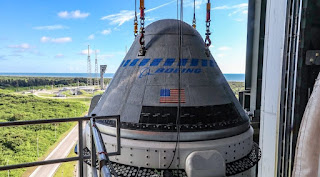
There was also a difference of opinion between NASA and Boeing involving the risk of stuck propulsion valves on the company’s CST-100 Starliner that delayed an uncrewed test flight last summer. Boeing evaluated the risk as low, the panel said, while NASA considered it moderate during a flight readiness review. That review, the panel concluded, “revealed NASA and Boeing do not share a common understanding of how to assess and characterize risk.”

The language of the report suggested the issue came up in the flight readiness review held several days before the scheduled launch, while the problem itself was reported only after the launch was scrubbed a few hours before the scheduled liftoff. However, a company spokesman said that the problem was discovered after the flight readiness review, and also played down the difference in opinions highlighted in the ASAP report.

“It is not uncommon to have differences in the risk scoring on the magnitude of various technical issues being addressed at the review. This is because we use different rubrics, or scoring systems, for our risk assessments,” Boeing said in a statement. “Using different assessments can be healthy for the program as it allows management to better understand the total level of risk as the scoring systems look through different lenses to ultimately drive down risk and increase crew safety.”

The panel also took issue with the “disaggregated” way NASA’s exploration efforts are organized. That structure treats the Space Launch System, Orion spacecraft and Exploration Ground Systems as separate programs, which the panel attributes to the uncertain direction of the agency’s exploration programs after the cancellation of the Constellation program more than a decade ago.

“In essence, it appears that the cancellation of the Constellation program has led to a cautious stance among NASA leaders driven by the assumption that having an Apollo-like program now is a problematic political optic, and like Constellation, a possible target for cancellation by a future Administration,” the panel wrote. “In effect, NASA has accepted the disaggregated program structure as normal, and is now propagating this structure as a preferred business and risk management model, even though it is essentially an untried approach for an integrated systems engineering effort of this magnitude and complexity.”

Among the panel’s recommendations was to create an integrated Artemis program led by a single manager “endowed with authority, responsibility, and accountability” along with a bottoms-up approach to systems engineering and integration as well as risk management. NASA sometimes refers to an “Artemis program” today, the panel noted, but without the formal program architecture that risks “confusing both employees and contractors about who is ultimately responsible and accountable.”

The panel recommended NASA establish a “board of directors” consisting of senior NASA Headquarters officials as well as its center directors. The members would examine agency issues outside of their perspectives as heads of programs or centers. It also recommended a strategic vision for the future of space exploration and operations that would look out at least 20 years, including roles for commercial and international partners and its workforce requirements.

“NASA is no longer the sole driver or customer for human space flight capabilities and related technology, nor is it the sole organization creating demand,” the panel stated. “Consequently, it is imperative for NASA leaders to establish a clear vision of the future and an understanding of the Agency’s purpose to anchor its decisions today and tomorrow.”

Wednesday, April 7, 2021

Astronauts move SpaceX capsule to new docking port for 1st time ahead of space station crew arrivals

NASA's SpaceX Crew-1 astronauts completed the first commercial crew port relocation at the International Space Station on Monday (April 5), as they moved the Crew Dragon spacecraft in preparation for the arrival of the next crew. The relocation was performed by NASA astronauts Michael Hopkins, Victor Glover and Shannon Walker, along with Japan Aerospace Exploration Agency (JAXA) astronaut Soichi Noguchi. The crew undocked the Crew Dragon, nicknamed Resilience, from the forward port of the space station's Harmony module at 6:30 a.m. EDT (1030 a.m. GMT) and reconnected to the module's space-facing port at 7:08 a.m. EDT (1108 GMT). The astronauts moved Resilience to a different port on the space station to make room for an incoming Crew Dragon spacecraft arriving later this month, named Endeavour, which will dock at Harmony's forward port. The arriving SpaceX Crew-2 mission includes NASA astronauts Shane Kimbrough and  Megan McArthur, JAXA astronaut Akihiko Hoshide, and European Space Agency (ESA) astronaut Thomas Pesquet. The crew is scheduled to launch to the space station on April 22 from Launch Complex 39A at NASA's Kennedy Space Center in Florida.


"We're very excited about [moving Resilience] and we'd like to say congratulations on behalf of the whole Expedition 64 team as well as the Crew-1 Dragon team. Congratulations to the commercial crew program for 10 years. What an amazing 10 years it has been," Hopkins said during a call with Steve Stich, NASA Commercial Crew Program manager, from the space station on Friday (April 2). "To think about where you started and where we are now — and now we're getting ready to actually take this vehicle out for a little spin. … We're all very excited to be a part of it."

On March 19, NASA astronaut Kate Rubins, along with two Russian cosmonauts Sergey Ryzhikov and Sergey Kud-Sverchkov, relocated the Soyuz MS-17 spacecraft from the Earth-facing port of the station's Rassvet module to the space-facing Poisk port. However, unlike the Soyuz relocation maneuver, which required manual flying, the Crew Dragon is operated autonomously.

"It's pretty cool and it is quite an amazing view to separate from your vehicle that's been your home for months and to be able to look at it from 60 meters [about 200 feet]," Rubins said during the call from the space station, which NASA shared on YouTube Friday (April 2).

In preparation for Monday's relocation, Hopkins said he would be spending his Easter Sunday making sure he cleaned everything out of the Crew Dragon spacecraft — his version of an Easter egg hunt, since he had been staying in Resilience for the last couple of months, he said during the call.

The spacecraft has been "largely quiescent" since the SpaceX Crew-1 astronauts arrived at the space station on Nov. 16. Therefore, the crew prepared for the move by verifying that Resilience's communication systems were up and running, and completing suit fit checks, which Hopkins said "went very well" during the call.

Crew-1 is scheduled to return to Earth in late April or early May, leaving the space-facing port of Harmony vacant for when a Dragon cargo spacecraft arrives with supplies and the first set of new solar arrays for the space station later this summer. Rubins and Glover began preparing the space station for the new solar arrays during a spacewalk on Feb. 28, when they installed one of two modification kits that are needed to support the new arrays. The Dragon cargo spacecraft will need to dock at the space-facing port to allow for robotic extraction of the new solar arrays from Dragon's trunk using Canadarm2, according to a statement from NASA.

While today's relocation maneuver was the first time a Crew Dragon spacecraft needed to be moved, it likely won't be the last, given the Crew-1 mission is the first of six certified crew missions NASA and SpaceX have planned as a part of the agency's Commercial Crew Program, according to the statement.