Showing posts with label Ariane 6. Show all posts

Monday, June 10, 2024

At long last: Europe's new Ariane 6 rocket set to debut on July 9

Europe's new Ariane 6 heavy-lift rocket is set to launch for the first time on July 9 after a series of delays. The European Space Agency's (ESA) Ariane 6 rocket, developed by ArianeGroup, will lift off from Europe's Spaceport in French Guiana. The date of the rocket's long-awaited inaugural flight was announced at the ILA Berlin air show on June 5; however, a specific launch time or window has not yet been released. "Ariane 6 marks a new era of autonomous, versatile European space travel," Josef Aschbacher, ESA's director general, said in a statement from the space agency. "This powerful rocket is the culmination of many years of dedication and ingenuity from thousands across Europe and, as it launches, it will re-establish Europe's independent access to space." Ariane 6 is Europe's next-generation heavy-lift launch vehicle, consisting of a main and upper stage and two or four solid rocket boosters. Its reignitable upper stage will allow it to launch multiple missions on different orbits on a single flight, ESA officials said in the statement. The new rocket will replace the venerable Ariane 5, which was retired last July after 27 years of service and more than 100 successful launches. Europe's original plan was to have the Ariane 6 up and running by 2020, allowing for a smooth transition between the two launch vehicles. However, Ariane 6 suffered a series of delays caused by technical issues, COVID-19 and design changes.
 

"I would like to thank the teams on the ground for their tireless hard work, teamwork and dedication in this last stretch of the inaugural launch campaign," Aschbacher said in the statement. "Ariane 6 is Europe's rocket for the needs of today, adaptable to our future ambitions."

With a scheduled launch date officially on the books, ESA and its partners are completing the final steps for liftoff, including a fueling test and practice countdown known as a wet dress rehearsal, which is slated for June 18.

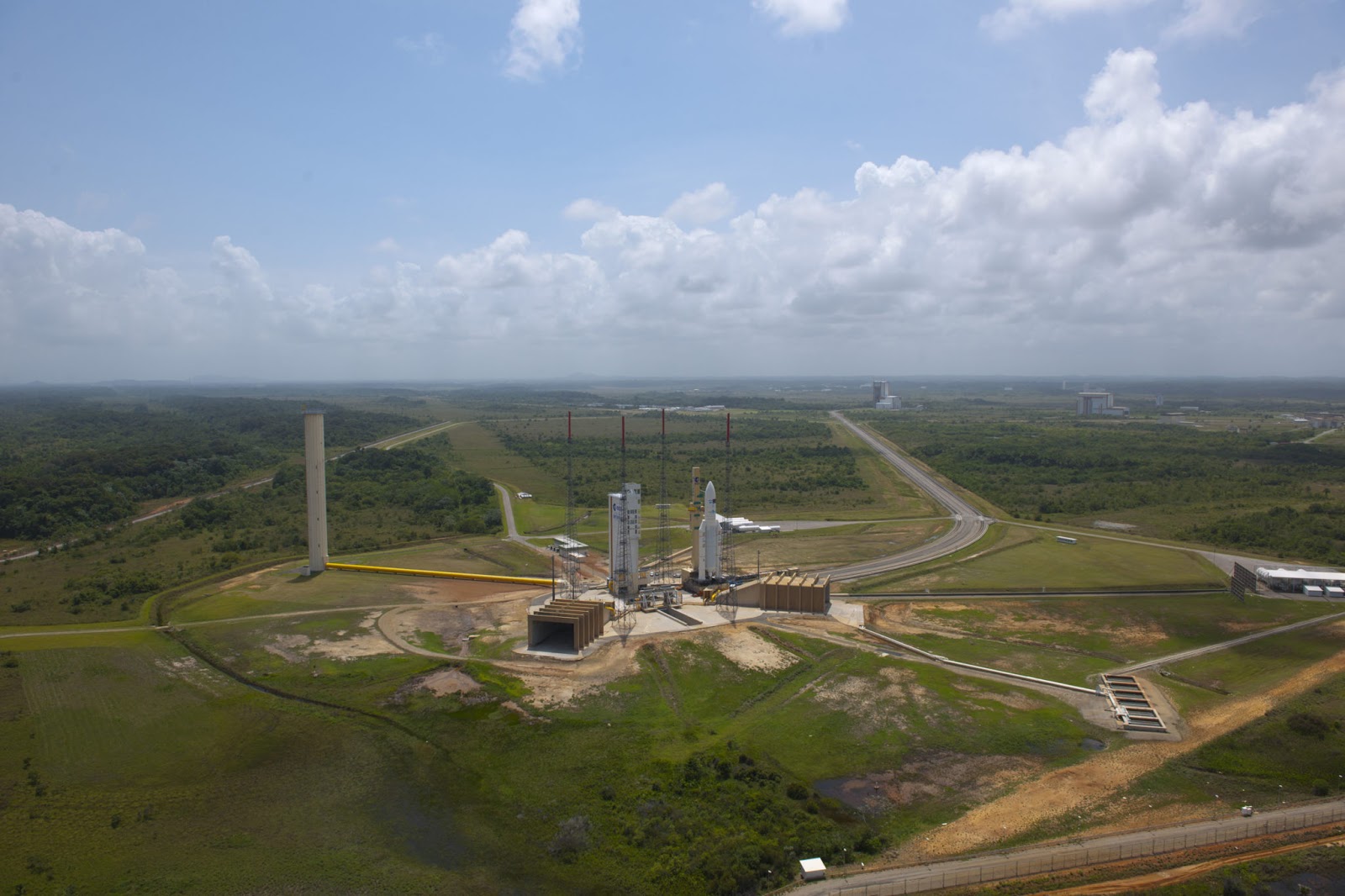
Europe's new Ariane 6 rocket still has to complete several milestones before it can be cleared for its debut flight. (Image credit: ESA-Manuel Pedoussaut)

"This flight will mark the culmination of years of development and testing by the teams at ArianeGroup and its partners across Europe," Martin Sion, CEO of ArianeGroup, said in the statement. "It will pave the way for commercial operations and a significant ramp-up over the next two years. Ariane 6 is a powerful, versatile and scalable launcher that will ensure Europe's autonomous access to space."

While the inaugural Ariane 6 launch is primarily a demonstration flight, it will carry various payloads, which have already been integrated on the rocket's payload carrier. If successful, Ariane 6 could launch on a second flight by the end of the year, with the goal to eventually complete about 10 launches each year.
 

Friday, October 30, 2020

ESA lays out roadmap to Ariane 6 and Vega-C flights

Vega-C and Ariane 6 are being developed by ESA to assure Europe's independent access to space. The maiden flight for Vega-C is planned to take place in June 2021, that for Ariane 6 for the second quarter of 2022. Solid progress is being made on both Vega-C and Ariane 6 development programmes. Since March, some technical events and the COVID-19 pandemic have both impacted the progress of activities. Uncertainty from COVID-19 still persists globally to date. Vega-C is a more powerful and versatile version of the Vega launch vehicle currently operating at Europe's Spaceport in French Guiana. Vega-C's maiden flight is planned for June 2021. Vega was on track for its return to flight, after the July 2019 failure, with its mission (VV16) in March 2020, but Europe's Spaceport had to be closed due to COVID-19 safety measures. The VV16 launch campaign resumed in May but several further launch attempts were halted due to unfavourable weather. Vega's return to flight, with the new SSMS dispenser carrying 53 satellites, was successfully launched on 2 September. Between February and September no activities for the preparation of Vega-C were possible in the Vega mobile gantry while it housed the P80 solid rocket motor in readiness for flight VV16, due to safety constraints. The qualification at system and subsystems level is currently under finalisation. As from October, all the new solid motors for Vega-C have completed qualification testing. The Zefiro-40 solid rocket motor for Vega-C completed qualification tests in 2019. The final test of the P120C took place successfully on 7 October.


Two Vega flights, VV17 and VV18, are planned before Vega-C. Activities for the modification of the mobile gantry for Vega-C, such as modifications of the fluids networks as well as connection and installation of the new control bench for Vega-C, will have to start after VV18 now planned early February.

Vega-C maiden flight is planned for June 2021.

Vega-C is a project managed and funded by the European Space Agency. Avio is the industrial prime contractor. Arianespace commercialises Vega-C.

Ariane 6
ESA, CNES and ArianeGroup have jointly established a consolidated reference planning for Ariane 6 development and are working as an integrated team in their respective roles to make it happen. This schedule is based on analysis of recent achievements, remaining critical milestones and the impact on the programme caused by the COVID-19 pandemic.

With the successful third static fire test of the P120C solid rocket motor on 7 October, all the propulsion elements of the launcher system have completed their qualification tests.

At Europe's Spaceport, activities for the finalisation of the Ariane 6 launch base are progressing. First integration testing with fullscale 'mock-ups' of the P120C strap-on booster and of Ariane 6's central core took place in the new mobile gantry. Testing of the cryogenic arms that link the launch pad and the launch vehicle are also ongoing at Fos-sur-Mer in France, before shipping to French Guiana.

ArianeGroup is completing the challenging development and qualification of the Ariane 6 Auxiliary Power Unit for the upper stage. This device will allow Europe to offer additional capabilities in satellite deployment for the satellite constellation market.

The first Ariane 6 upper stage has been assembled in Bremen, Germany. Coupling the launcher's tanks with the equipped engine bay of the re-ignitable Vinci engine for the first time. The upper stage is currently undergoing mechanical, fluid and electrical tests, before leaving for further tests at the DLR German Aerospace Center's Lampoldshausen facilities in Germany.

There, the complete stage will be hot fire tested on a new test bench specially developed by DLR for the Ariane 6 upper stage. The Ariane 6 upper stage static fire tests are planned to start in the second quarter of 2021.

In parallel, the first Ariane 6 core stage and the second Ariane 6 upper stage are under preparation. These specimen will be shipped to Europe's Spaceport from Les Mureaux (France) and Bremen (Germany) respectively, for the combined tests campaign.

In the third quarter of 2021, the Ariane 6 launch base will be handed over from CNES to ESA. At this point the Ariane 6 combined tests campaign can start. These series of tests will bring the launch vehicle and launch base together for the first time for integrated tests of multiple systems. This will include a static fire test of Ariane 6 while standing on the launch pad for the first time.

Following the successful combined test campaign and Ground qualification review of the launch system, the first launch campaign, with the integration of the maiden flight hardware, will start.

When all these steps are successfully completed Ariane 6 will be in a position to perform its maiden flight in the second quarter of 2022.

Ariane 6 is a project managed and funded by the European Space Agency. ArianeGroup is design authority and industrial prime contractor for the launcher system. The French space agency CNES is prime contractor for the development of the Ariane 6 launch base at Europe's Spaceport in French Guiana. Arianespace commercialises Ariane 6.

Impact of COVID-19
The measures taken to control the pandemic have seriously impacted the progress of activities both in Europe and at Europe's Spaceport since March 2020, including as a result of social distancing, site lockdowns and reduced capacity at facilities, travel restrictions, quarantines and confinement measures.

This has considerably slowed all working and operational processes for prime contractors and their respective subcontractors around 13 European countries. Ongoing pandemic effects continue to disrupt on-going development and operations.

"We constantly and closely monitor the COVID-19 impact and technical challenges on our ongoing space transportation developments and operations. Together with our contractual partners and participating States, ESA continues to pull together towards our common priority goals which are the maiden flights of Vega-C and Ariane 6," commented Daniel Neuenschwander, Director of Space Transportation at ESA.

Tuesday, September 11, 2018

Ariane 6 accelerates as first commercial GEO contracts signed

Arianespace is present at World Satellite Business Week (WSBW) from September 10 to 14 in Paris, confirming the attractiveness of its launcher family with the announcement of two contracts for Ariane 6: the first with Eutelsat as part of a launch services agreement involving five satellites; and the second with France's CNES space agency and the country's DGA defense procurement agency for the CSO-3 satellite. A third contract also was signed recently with the Indian Space Research Organization (ISRO) for Ariane 5 missions to orbit two satellites. Arianespace's backlog is now 59 launches to be carried out during the coming years, including three on Vega C and five on Ariane 6 - the new launchers slated to make their maiden flights in 2019 and 2020, respectively. Stephane Israel, Chief Executive Officer of Arianespace, will participate in the WSBW roundtable entitled: "Accelerating Access to Space" on Tuesday, September 11 at 4:00 p.m. First multi-launch commercial contract with GEO satellites for Ariane 6, along with its third institutional mission. As World Satellite Business Week opened its doors, Arianespace and Eutelsat announced the signature of a multi-year multiple-launch agreement concerning five satellites to be launched through 2027, making Eutelsat the first commercial Ariane 6 customer with geostationary orbit satellite payloads. For institutional missions, after the two launch contracts signed in 2017 for the European Commission and ESA's Galileo constellation, CNES and the DGA have chosen the A62 version of Ariane 6 (with two boosters) to launch their CSO-3 satellite. These orders clearly reflect the competitiveness and versatility of Ariane 6, which will be available in two versions to handle all orbits and multiple payload configurations under the fairing.


Ariane 5 also confirmed its continued attractiveness, as Arianespace signed a contract with India's ISRO space agency for the launch of two geostationary satellites: GSAT-30 and GSAT-31.

In total, and taking into account the signing of a contract with B-SAT during the first half of 2018 to launch BSAT-4b with Ariane 5 - as well as several contracts for the Proof of Concept (POC) flight of the Small Satellite Launch System (SSMS) on Vega - Arianespace's order book value has reached more than euro 4.9 billion. This corresponds to 59 launches: 17 Ariane 5s, five with Ariane 6, 28 with Soyuz and nine with Vega/Vega C.

With nearly one-third of these launches for the European institutions, Arianespace reaffirms its mission to provide Europe with reliable and independent access to space while also confirming its export success.

A contract also is expected to be signed with the South Korean space agency (KARI) on September 20 in Daejeon for a satellite to be lofted by Vega C.

13 satellites orbited by Ariane, Soyuz and Vega since January 2018

Arianespace has carried out five launches since the start of 2018 for both institutional and commercial customers, clearly reflecting the versatility of its launcher family and services. The 13 satellites launched weighed a cumulated total of 25 metric tons and they are performing communications, navigation, science and Earth observation missions. From January to August 2018:

+ Three Ariane 5 launchers orbited four geostationary communications satellites for SES, Yahsat, Avanti Communications and SKY Perfect JSAT/Japanese Ministry of Defense, along with four satellites in the Galileo navigation constellation for the European Commission and ESA,

+ A Soyuz orbited four satellites in SES's O3b constellation, and

+ A Vega launched ESA's Aeolus science satellite, which will support sustainable development.

Six more launches are scheduled during the remaining four months of the year, with two upcoming missions being highly symbolic:

+ The 100th Ariane 5 launch, scheduled for September 25, will loft Horizons 3e for Intelsat and SKY Perfect JSAT, and Azerspace-2/Intelsat 38 for Azercosmos and Intelsat.

+ BepiColombo, a mission to explore the planet Mercury, for ESA in partnership with the Japanese space agency (JAXA), to be launched by an Ariane 5 on October 19.


Ariane 6 and Vega C: getting closer!

Development of the new members of Arianespace's launcher family is proceeding apace, with first missions planned in 2019 for Vega C and 2020 for Ariane 6. A milestone took place on July 16 with a successful first hot firing test of the P120C solid rocket motor, which will equip the strap-on boosters for Ariane 62 and Ariane 64, as well as Vega C's first stage. This followed a series of successful tests of the Vulcain 2.1 main stage engine and Vinci upper stage engine for Ariane 6, along with progress toward Maturity Gate 7 (the critical design review) - which is planned by year-end.

European institutions also have reached major milestones in their commitment to Ariane 6 and Vega C. After the European Commission announced its proposed ambitious space budget for the upcoming decade, an ESA Council meeting in June confirmed funding for the transition period between Ariane 5 and Ariane 6. In addition to the four government contracts already signed for Europe's new launchers (three for Ariane 6 and one for Vega C), the commitment of European governments to all missions identified during the transition phase is a key to the sustainable success of these launchers.

Tuesday, July 10, 2018

Largest-ever solid rocket motor poised for first hot firing

This week, the largest solid rocket motor ever built in one piece will be test fired at Europe's Spaceport in French Guiana for the first time. This important milestone validates the booster for use on Vega-C next year and on Ariane 6 from 2020. Fully loaded with solid fuel, the P120C rocket motor common to Europe's future launchers Vega-C and Ariane 6, will be held vertically in the test stand and ignited. Sensors will gather about 600 measures during the test. The P120C is 13.5 m long and 3.4 m in diameter, contains 142 tonnes of solid propellant and provides a maximum thrust of 4615 kN (in vacuum) over a burn time of about 135 s. The design builds on existing expertise and lessons learned with Vega's P80 first stage motor. P120C will replace P80 as the first stage motor of Vega-C. Two or four P120Cs will be strapped onto Ariane 6 as boosters for liftoff. All main components of the motor such as nozzle, igniter, solid propellant, and insulated motor case have already been tested separately. This static firing will prove these technologies, materials and production techniques in combination and validate the behaviour of the assembled motor.


The test stand with the tools and equipment that will secure the P120C for its test firing, have had to be modified or developed to accommodate this huge motor.

Recently a full-scale model of the P120C filled with inert propellant allowed engineers to verify tools, check connections and perfect procedures.

Information gathered during this static firing will allow engineers to compare their numerical models against observed reality to consolidate the P120C design.

This will guide the design of the P120C qualification motor that will be static fired at the end of the year.

Wednesday, June 20, 2018

Arianegroup tests innovative technology for next generation upper stage rocket engine

A full-scale demonstrator of the thrust chamber for an upper-stage rocket engine incorporating the newest propulsion technologies has successfully passed first hot firing tests at the DLR German Aerospace Center P3.2 test facility in Lampoldshausen. The Expander-cycle Technology Integrated Demonstrator, ETID, will help to prove innovative technologies, materials and manufacturing techniques. It is tested in the frame of ESA's Future Launchers Preparatory Programme, aiming to increase the future competitiveness of European launchers by creating ready-made technical solutions, which can be transferred for quick development projects with minimal cost, effort and risk. Different technologies and methods of manufacture have been tested, such as additive manufacturing, laser ignition and cost-efficient materials. In addition, components will be tested to lay the foundations for a future 'smart' engine. Upper-stage engines operate in specific conditions such as vacuum and weightlessness that are difficult to reproduce on the ground, and involve significant development risks that have to be mitigated.


By the end of the year, ETID will have been hot fired up to 20 times, each test run lasting 120 seconds, in conditions similar to those in space, with a near-vacuum provided by the test stand.

Next to ArianeGroup in Germany, the prime contractor of this programme, other European partners like GKN Aerospace in Sweden, APP in the Netherlands, Safran Aero Boosters in Belgium and Carinthian Tech Research in Austria have, all provided hardware components for these demonstrator tests.

Monday, June 18, 2018

ESA Council commits to Ariane 6 and transition from Ariane 5

The ESA Council met in Paris this past weeek to discuss the path towards the future exploitation of Ariane 6. In view of the progress made in the Ariane 6 programme, Participating States have decided on the completion of the development up to full operational capability and agreed to fund industrial incentives associated with the development of Ariane 6 and P120C solid rocket motor. Participating States also committed to start with the first step of the Ariane 6 and P120C Transition Programme. This programme supports the evolution from Europe's Ariane 5 to full operational capability of Ariane 6. Ariane 6 is Europe's new-generation launcher, designed to secure guaranteed access to space for Europe at an affordable price for European institutional users. It will operate in two configurations: Ariane 62 is fitted with two P120C strap-on boosters while Ariane 64 has four. Ariane 6's maiden flight is planned for mid-2020.


P120C is the largest carbon-fibre solid propellant booster ever built in one segment at almost 13.5 m long and about 3.4 m in diameter. Two boosters will be used on Ariane 6's maiden flight in 2020.

Friday, February 16, 2018

140 successful tests and several "firsts" for Vinci, the engine for Ariane 6

The re-ignitable Vinci, engine, which will power the upper stage of the Ariane 6 launcher, has now successfully completed its last two subsystems qualification campaigns (M6 and M7) with 140 engine tests conducted.The tests in campaigns M6 and M7, vital for qualification of the engine subsystems, were carried out on the PF52 bench at the ArianeGroup site in Vernon, France, and on the German Aerospace Center DLR's P4.1 bench in Lampoldshausen, Germany. A total of 25 tests (16 for M6 and 9 for M7) were carried out under nominal conditions, and include three major performance "firsts":

- a test of 1,569 seconds - an unprecedented duration,

- a series of 20 successful boosts (1 ignition followed by 19 engine re-ignitions), totaling an operating duration of 300 seconds,

- a continuous burn of 800 seconds in "high operation", i.e. at the maximum thrust for which the engine is designed.


The purpose of these tests was also to test the Vinci engine beyond its operational requirements, as it will only require ignition a maximum of 4 times during its missions, with a maximum burn time of 900 seconds in flight.

Valerie de Korver, Product Manager Vinci Propulsion System at ArianeGroup, said: "These campaigns went particularly smoothly and we demonstrated considerable margins with respect to the flight requirements, in particular thanks to a new ignition system and we successfully achieved a number of firsts, such as performing 20 boosts in a single test.

"This is a major step in demonstrating the ability of the Vinci engine to meet the versatility demands of the Ariane 6 launcher. It is also a new and major milestone for the program and for the teams, who are well aware of the challenges faced in these campaigns and who are always intensely committed to ensuring their success."

The Vinci engine was developed by ArianeGroup for Ariane 6 and provides the future European launcher with extreme versatility. Its main feature is its multiple ignition capability: Vinci will be able to re-ignite in flight as many times as necessary, in order to place several payloads in orbit at different locations, according to the specific needs of the mission.

This engine will enable Ariane 6 to carry out all types of missions, regardless of duration and target orbit, particularly the deployment of satellite constellations, for which demand will continue to grow.

Ariane 6 engine testing is continuing apace. This further success follows on from the first successful test on 13 January in Lampoldshausen, Germany, of the Vulcain 2.1 engine which will power the launcher's main stage. These tests enabled the engine to be tested throughout its flight envelope, whether in terms of thrust, mix ratio, or propellant supply conditions.

Design authority and industrial lead contractor for the development and operation of the Ariane 6 launcher on behalf of the European Space Agency (ESA), ArianeGroup coordinates an industrial network of more than 600 companies in 13 European countries, including more than 350 Small and Medium Enterprises (SMEs).

Sunday, December 24, 2017

ArianeGroup to start production of the first Ariane 62

With the successful conclusion of Maturity Gate 6.2, ArianeGroup and its industrial partners are moving into an important new phase in the development of Ariane 6, a flagship European Space Agency (ESA) program. This review confirmed that the industrial process of Ariane 6 is mature enough to start construction of the first launcher, in line with the program's objectives. Ariane 6 is specifically designed to be able to respond to evolving market demands. It will be a versatile, modular, competitive launcher, available in two versions, Ariane 62 and Ariane 64, in order to guarantee the continuity of European access to space. "Starting the production of the first launcher just three years after the decision of ESA Member States to launch the Ariane 6 program in December 2014 is a major step forward," said Alain Charmeau, CEO of ArianeGroup. "This once again demonstrates the efficiency of the industrial process put in place for the development, production and operation of Ariane 6. The industry is thus meeting its commitments to serve all future Ariane 6 customers, in ESA-coordinated national and European institutions, which are currently preparing the operational launch phase with our subsidiary, Arianespace".


This milestone follows on from Maturity Gate 6.1 last April, which validated the technical, industrial and programming characteristics of Ariane 6, enabling launcher development to continue at the anticipated rate. The positive conclusion of this milestone thus made it possible to launch the production of the Ariane 6 ground qualification models.

At the same time, the European Space Agency is preparing to put the launcher into operation. A review called "Exploitation Readiness Key Point" (ERKP) analyzes in detail all the aspects associated with the commercialization and mass production of Ariane 6 launchers. The conclusions are expected in March 2018.

As the industrial lead contractor for development and operation of the Ariane 5 and Ariane 6 launchers, ArianeGroup coordinates an industrial network of more than 600 companies in 13 European countries, including more than 350 Small and Medium Enterprises. The ArianeGroup subsidiary Arianespace is responsible for the commercialization of Ariane 6.

Tuesday, December 19, 2017

ArianeGroup signs contract with ESA for future Prometheus engine

Prometheus is a European demonstrator for a very low cost reusable engine, running on liquid oxygen (LOx) and methane. It is the precursor for future European launcher engines as of 2030. The aim is to be able to build future liquid propellant engines with a unit cost of about 1 million euros, or 10 times less than the cost of producing existing engines such as the Vulcain2. The success of this type of technological challenge demands an entirely new approach and the use of innovative design and production methods and toolsApart from switching from the traditional Ariane propellant (transition from the liquid oxygen and liquid hydrogen combination to a combination of liquid oxygen and methane), the demonstrator will entail major developments, including digitilization of engine control and diagnostics, and manufacturing using 3D printing in a connected factory environment. The 75 million euro contract signed by Daniel Neuenschwander, Director of Space Transportation at the European Space Agency (ESA), and Alain Charmeau, CEO of ArianeGroup, the 50/50 joint-venture set up by the Airbus and Safran groups, covers the design, manufacturing and testing of the first two examples of the Prometheus demonstrator.


The French space agency (CNES) is leading in the early design process, and testing is scheduled on the P5 test bed of the German Aerospace Centre (DLR) in Lampoldshausen, Germany, as of 2020.

"The development of Ariane 6 is ontrack, with a first flight scheduled for 2020. This new Prometheus contract with the European Space Agency is paving the way for the future of European launchers, with the goal of designing and building a reusable engine for one tenth the cost of today's Vulcain2 type engines. I therefore thank ESA and the Member States for their contribution and their confidence in entrusting us with the development of the European technology of tomorrow."

Following the initial phase which was completed in early December, the first Program Review confirmed the consistency of the design choices with engine specifications and in particular with the recurring cost targets. At the same time, subsystems testing has started with the gas generator campaign (one of the parts built using 3D printing) on the DLR's P8 test bed in Lampoldshausen.